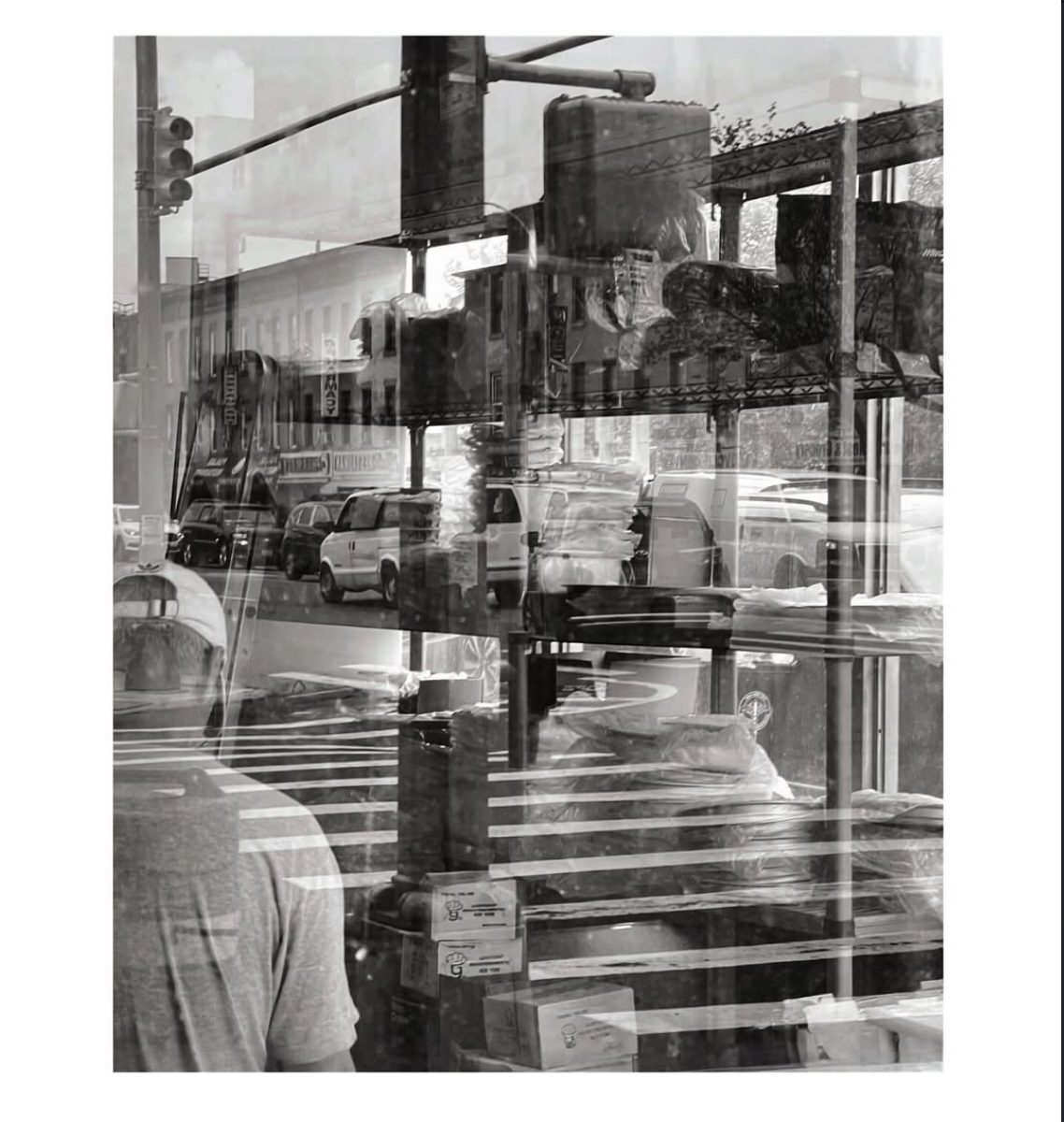
In revolving sequences that entangle prose and verse, art, correspondence, and annotation, Rolling Windows streams encounters of surveillance, digital lust, and epistolary affect amidst fragile media infrastructures, ecological precarity, and the algorithmic composition of the face. Following the speaker on the discontinuous trail of exile and the recombinant zones of encoded networks, the narrative’s insistence on interval and diversion—source, sample, overdub—is as much a proposal for a migratory ecopoetics as it is a methodology for persons on the move.
summer 2026, from roof books
order the book here
A litany of ideas, phrases, fragments scrawled on index cards and hotel stationary, the margins of books, and the digital pages of the Notes app. Missives written on planes, trains, and automobiles, dictated by voice while walking down the street. A metaphysics of jot. … As technological advances further displace the writer (as occupation, inclination), Campanioni’s promulgation of compositional joy is more than just a parlor trick. Rather, it is a means by which to see the world with new eyes, to at once teach and be taught. … With Rolling Windows, Chris Campanioni solidifies his place as a writer of, in, and with the world. His work, ceaselessly articulated, has much more to give us.
— Joshua Massey, The Brooklyn Rail
Rolling Windows is a succulent, sultry refraction of digital sonics. Campanioni’s poetics do not rupture the fourth wall inasmuch as they bring the poem and reader so close to one another that the veil of longing and exile constellates into a velvet of intimate inquiry. The poet spirals across media and data systems and returns from the outernets of bandwidth to ask, “what’s the difference between a human brain & a hard drive / a hard drive & a tomb.” This is a collection of playful, dexterous care excavating what the datafibers have numbed within the synapses, for “what’s left behind when the body moves, when it collapses inward or elides touch.” Rolling Windows peels away the coldness of what we have inherited from the computer age of colonialism and late-stage capitalism to rewire the body’s sensory-memory. Campanioni is a poet of widening and wilding imagination, who wades into digital fracture to glitch language toward staggering clarity.
— Anthony Cody
In Chris Campanioni’s stunning Rolling Windows, an “erotics of indeterminacy” activates formal challenges to the digital nowness of screentime and its obscene elisions of human feeling. This is information flow as noetic ice floe, where the blur becomes the message: the end(s) of the earth seen from an archipelago of VHS tape detritus floating and whirring in the disintegrative climates of disaster. Metaleptic brain tissue is hardwired into a syntax of digital nomenclature, while deictic surges abound in the ether of intercourse and dromomania. The auratic capital of tactility necromances the fossilized remains of flatland romance in the swipes of desire and the wipes of contagion. Here, the mouth is still a vessel of lyric force, while the screen assembles a window-seat view into anthropocentric afterlives. In and against the encroaching waste land of trademarked A.I. Slop, Rolling Windows invites us to return to analog forms of desire: don’t just wipe the screen or swipe the phantom, roll down your window, look out and feel the zephyr on your face, breathe in the battery-flesh of the world.
— Jose-Luis Moctezuma